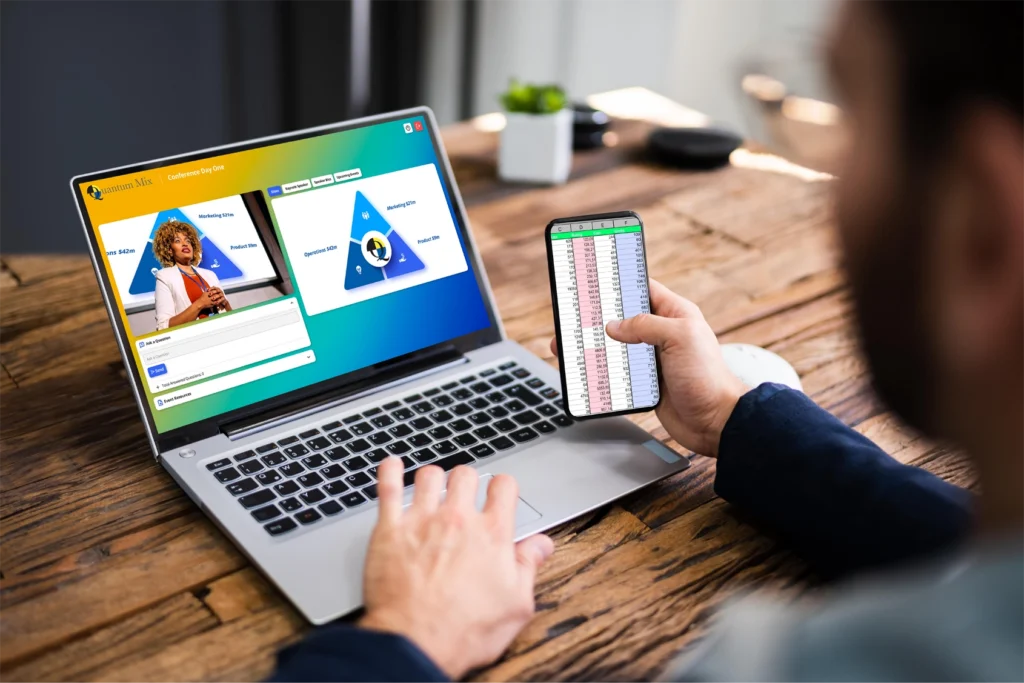
With the virtual events market size projected to reach $27 billion by 2031, it’s clear that virtual events are a core aspect of enterprise communications. With such a reliance on these virtual spaces to transmit critical and sensitive information, security must be considered a fundamental element.
Organizations hosting investor relations events, executive town halls, product launches, and customer webinars must ensure that their data remains protected throughout every stage of the event lifecycle.
What is Virtual Event Security?
Virtual event security is the combination of technologies, policies, and access controls used to protect webinars, webcasts, virtual meetings, and online events from unauthorized access, data breaches, cyber-attacks, and compliance violations.
Effective virtual event security measures can include a range of measures including (but not limited to) encryption, authentication, attendee validation, access management, monitoring, and secure content moderation.
Why Does Virtual Event Security Matter?
The growth of remote work, hybrid events, and digital communications has dramatically expanded the attack surface for cybercriminals. With the growing sophistication of AI tools being used by hackers, this number is likely to rise. In 2025 the IBM Data Breach Report found that 97% of organizations surveyed had experienced an AI-related security incident, at an average cost of $4.4million per breach.
For enterprise organizations, the consequences can extend far beyond simple operational disruption. Every webcast, webinar, and virtual conference creates opportunities for content theft, data exposure, financial loss, regulatory compliance violations, and reputational damage. With so much at stake, even a single security lapse should be considered as a significant organizational risk.
Common Security Risks in Virtual Events
With the increasing number of AI tools being used both to secure platforms, and to infiltrate them, public system breaches are set to rise an average of 44% year on year. While it’s not possible to predict every security weakness before it’s exploited, there are some common risks that organizations should be aware of.
Unauthorized Event Access
Open registration links and weak authentication controls can allow unauthorized individuals to join sensitive events. This may expose confidential information to competitors, malicious actors, or unintended audiences.
Webinar Hijacking
Unauthorized attendees can disrupt presentations, post inappropriate content, or otherwise interfere with event proceedings. Without proper moderation controls, webinar hijacking can quickly damage credibility and attendee trust.
Content Theft and Redistribution
Screen recording software, unauthorized downloads, and shared access links can lead to proprietary content being stolen or distributed beyond its intended audience.
The risk is particularly significant for earnings calls, product announcements, and compliance-sensitive communications.
Data Breaches
Attendee registration information, event analytics and business communications could all be considered to contain sensitive data that should be protected from interception and unauthorized access.
Compliance Violations
Organizations operating in regulated industries must ensure virtual events comply with a range of regulatory requirements such as GDPR, HIPAA, SEC Disclosure.
A single compliance breach could see an organization facing significant fines, as well as damage to reputation and stakeholder trust.
Essential Security Features for Virtual Events
Not all virtual event platforms provide the same level of protection. Enterprise organizations should look for platforms with, at minimum, the following security capabilities.
End-to-End Encryption
Encryption protects data while it is transmitted between participants inside the event infrastructure. This helps to prevent interception and unauthorized access to event content.
Multi-Factor Authentication (MFA)
MFA adds additional identity verification beyond passwords, reducing the risk of access via compromised accounts.
Single Sign On (SSO)
SSO enables centralized authentication and identity management while improving both security and user experience.
Role Based Access Controls
Different audiences often require different permissions. Role-based controls help ensure attendees only access content relevant to their authorization level.
Unique Access Links
Individualized access credentials prevent unauthorized link sharing and reduce the likelihood of event intrusion.
Audit Logs and Reporting
Detailed reporting provides visibility into event participation, content access, and security activity, while supporting compliance requirements.
Best Practices for Securing Virtual Events
Technology is only part of the solution. Enterprises must also implement operational best practices to help ensure their events are secure.
Verify Attendees Before Granting Access with registration approval routes, email validation, and identity verification for data sensitive events.
Restrict Content Distribution by limiting downloads and providing secure on-demand access only through authorized and authenticated portals.
Train Events Teams to ensure that moderators, producers, and presenters all understand security procedures before an event begins.
Establish Incident Response Plans and prepare for potential disruption with clearly defined escalation paths and contingency procedures.
Conduct Regular Security Reviews which include checking access controls, authentication methods, and platform security settings before every major event.
Key Takeaways
Virtual events form part of an essential infrastructure for enterprise communications, investor relations, employee engagement, customer education, and regulatory communications.
As organizations continue to rely on digital engagement, security must be treated as a strategic business priority rather than a technical afterthought. The most successful organizations will be those that combine enterprise-grade security, strong compliance practices, and reliable event technology to deliver secure, engaging, and trustworthy virtual experiences.
For more information about how GlobalMeet helps keep your events secure, download our free E-Book or request a platform demo today.