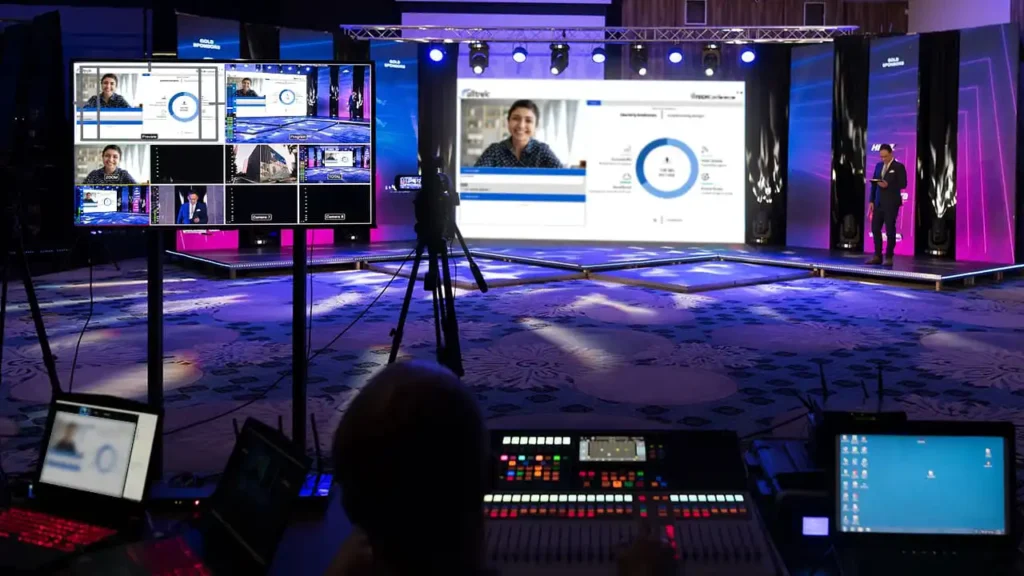
As organizational operations become increasingly distributed, and stakeholder expectations continue to rise, webcasting has become one of the most effective tools for modern corporate communications teams. From message planning to post-delivery analysis, modern corporations are using enterprise webcasting services to ensure that key messages received, and understood.
What is a Corporate Communications Webcast?
A corporate communications webcast is a live, simulated live, or on-demand online broadcast used by organizations to communicate with employes, investors, partners, and stakeholders at scale. Unlike email or other traditional comms formats, webcasts combine video with presentations, audience engagement tools, and analytics to deliver consistent, measurable, and engaging communications across global workforces.
Traditional Communications Aren’t Always Enough
Many organizations still rely heavily on email newsletters, static presentations, and written announcements to communicate important information to both their employees and their stakeholders.
While these channels remain valuable in many situations, they can struggle to capture audience attention. Without the tone and context afforded by video engagement rates and understanding are more likely to decline. A 2026 narrative review of over 1,158 studies found that relationships, trust, and group cohesion develop more slowly during online engagements, with information processing speeds also reducing in line with the reduced active interaction with others.
Employees, investors, and stakeholders increasingly expect communication experiences that are interactive, transparent, and accessible from anywhere. This shift has elevated webcasts from a simple broadcasting tool to a strategic communications choice.
How Webcasts Support Strategic Corporate Communications
When meeting face-to-face isn’t possible, video is the closest we can get to real human connection because, when done well, it preserves the nonverbal cues that text or audio only communications completely strip away. Webcasts provide a medium to communicate and engage with global audiences simultaneously in the most natural and engaging way currently available.
More Human and Authentic Leadership Communication
One of the greatest challenges in corporate communications is creating a genuine connection between leadership and employees.
Written communication often lacks the visual and verbal cues that help build trust and understanding. Webcasts enable leaders to:
- Share messages in their own voice
- Demonstrate authenticity
- Communicate complex topics more clearly
- Reinforce organizational culture
- Improve executive visibility
Whether hosting a quarterly town hall or monthly all hands meetings, video-based communication helps leaders connect with their audiences on a more personal level.
Improve Employee Engagement
Research published in Personnel Psychology found that engaged employees experience a deeper connection with their work. They don’t just complete tasks, instead working more actively toward organizational goals, often while seeking additional responsibilities that will allow them to progress.
Enterprise webcasting platforms provide opportunities for interaction through integrated features such as:
- Live Q&A
- Polling
- Surveys
- Moderated Chat
These capabilities transform communications from impersonal one-way broadcasts into full conversations where employees become active participants rather than passively receiving information.
Ensuring Consistent Messaging Across Global Teams
Organizations operating across multiple locations often face communication challenges related to geography, time zones, and language difficulties. Webcasts create a centralized communication channel that ensures all employees receive the same message at the same time.
Benefits include:
- Reduced misinformation
- Improved message consistency
- Stronger organizational alignment
- Better communication governance
- Greater transparency
For multinational organizations this consistency is vital for maintaining trust and alignment across global teams.
Strengthening Executive Communications
Executive communication is one of the most important elements in shaping organizational culture and building employee confidence. A 2021 research study surveying 1027 employees found that when leaders communicate with vision, passion, and care, employees develop stronger organizational bonds and become significantly more engaged.
Webcasts are very effective for:
- CEO updates
- Executive briefings
- Business strategy announcements
- Organizational change initiatives
- Crisis communications
Unlike traditional communication methods, webcast events allow leadership teams to explain context, address concerns, and respond to questions in real time.
Supporting Investor Relations and Stakeholder Communications
Corporate communications are not just for internal teams. Investors, analysts, partners, regulators, and customers all rely on access to timely and accurate information.
Enterprise webcast platforms support:
- Earnings calls
- Investor days
- Shareholder meetings
- Regulatory updates
- Market announcements
A secure webcasting platform enables organizations to communicate important information consistently, while maintaining the compliance standards and polished presentation that external parties expect.
What to Look for in an Enterprise Webcasting Platform
Reliability: Broadcast interruptions can undermine audience confidence and damage brand reputations in an instant, so it’s important to choose a platform with proven uptime, even at scale.
Security: Corporate communications often include sensitive or restricted information. Enterprise grade security controls are crucial to ensure that only the right people are in the room when organizational insights are shared.
Audience Engagement Tools: Interactive engagement tools help to transform passive viewers into active participants, increasing comprehension and helping to develop a stronger organizational culture.
Analytics and Reporting: Data allows communications teams to demonstrate the impact of each event, creating opportunities for continuous improvement with every broadcast.
Accessibility: Features like captioning or multi-language translation might seem like luxuries, but they help to ensure that all audience members can participate fully, creating a more holistic event experience overall.
Key Takeaways
As organizations continue to embrace working globally, strategic corporate communications will continue to rely on video-first communications experiences.
Enterprise webcasts provide a scalable way to deliver executive messaging, improve employee engagement, support investor relations, and strengthen overall organizational alignment. For communications teams focused on transparency and trust, webcasting serves as both a communications channel and an organizational development tool.
Frequently Asked Questions
Why are webcasts important for corporate communications?
Webcasts enable organizations to communicate at scale while improving engagement, transparency, consistency, and measurement.
How do webcasts improve employee engagement?
Interactive features like live Q&A, polling, surveys, and chat encourage participation and help employees to feel connected to organizational leadership.
What is the difference between a webcast and a webinar?
A webcast is typically designed for one-to-many communications and large audiences, while webinars are often more interactive and intended for smaller groups.
How do you measure communication effectiveness?
Organizations can track attendance, engagement rates, audience participation, poll responses, and viewing analytics to evaluate communication performance.